
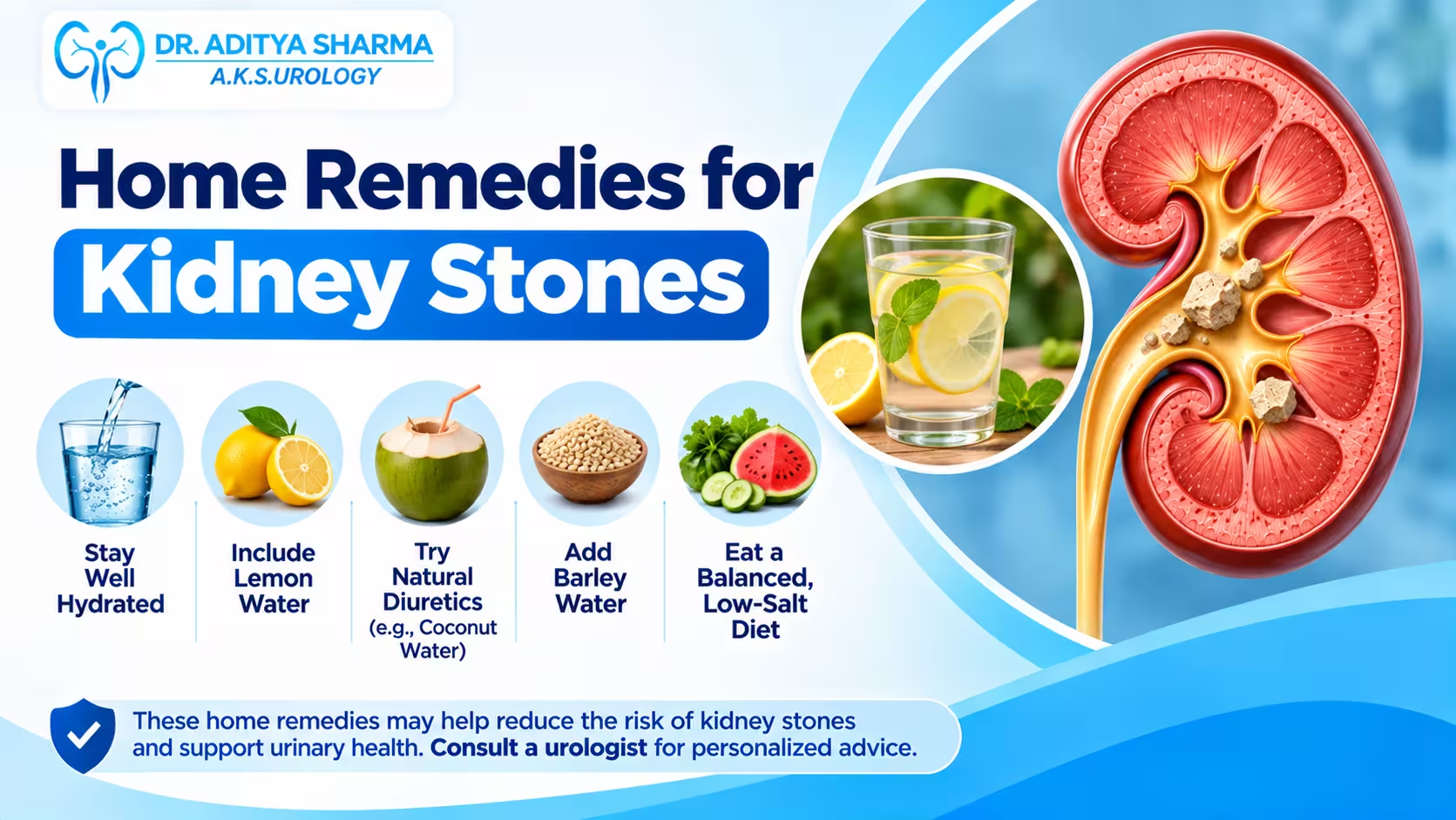
Increasing your water intake to flush out your urinary tract is the most effective home remedy for managing and preventing kidney stones. While natural remedies can help small stones pass and prevent new ones from forming, they cannot reliably dissolve large, existing stones.
7 Home Remedies for Kidney Stones
Some simple steps can help with discomfort and may reduce the chance of new stones forming. Here is what can be tried when a doctor has confirmed that home care is safe.
1. Drink Enough Water
Water is the first thing to focus on when dealing with kidney stones. When the body does not get enough fluids, urine becomes more concentrated. Minerals in the urine can then collect and form crystals, which may grow into stones.
Drinking enough water keeps urine diluted. It may also help a small stone move through the urinary tract.
A few habits can help:
- Drink water at regular times throughout the day.
- Keep a water bottle nearby.
- Drink extra fluids during hot weather or after sweating, if there is no fluid restriction.
- Check the colour of your urine. Pale yellow urine usually suggests better hydration than dark yellow urine.
Many adults who form kidney stones are advised to drink enough fluid to produce at least 2.5 litres of urine daily. The amount of water needed to reach this target differs from person to person.
Do not force yourself to drink large amounts of water during a severe attack of pain. If a stone is blocking the urinary tract, extra water will not remove the blockage. Follow the doctor's advice about fluid intake.
2. Add Fresh Lemon Juice to Water
Lemon juice contains citrate, which is a natural substance that is found in urine and helps to prevent certain kidney stones. Citrate helps to block the crystals from joining together.
Adding fresh lemon juice to water is an easy method of increasing its daily intake. This can be beneficial to some people who have low levels of citrate in their urine.
On the other hand, lemon water can not dissolve an existing kidney stone. Its main benefit is to help prevent the crystals from joining together and, consequently, help prevent kidney stones from forming. Lemonade should not have too much sugar added to it.
3. Use a Warm Compress for Pain
A kidney stone can cause waves of pain when it moves through the urinary tract. The use of heat may be able to relax the muscles and make the pain easier to tolerate.
It may be helpful to apply a water bottle or heating pad that is warm to the low back area or the side of your body. Be sure not to place anything too hot to burn the skin.
Another way to relieve discomfort is by taking a warm bath. This is not meant to remove the kidney stone or relieve any blockages in the system.
4. Take Gentle Walks
If the pain is minimal and the physician feels it is safe to do nothing until the stone passes, then walking can help ensure regular movement.
Not guaranteed that walking will make it pass quicker. Avoid running, strenuous exercise, or anything else that might increase the pain.
If walking proves to be painful, then stop and rest. Severe pain should be looked at and not exercised through.
5. Reduce Salt in Your Food
Eating too much salt can increase the amount of calcium that passes into the urine. This may raise the risk of calcium stones, especially in people who have had them before.
Try to cut down on:
- Chips and packaged namkeen
- Pickles and papad
- Instant noodles
- Salted nuts
- Processed meat
- Packaged soups and sauces
Home-cooked meals with less salt are a better choice. Also, check food labels because many packaged foods contain salt even when they do not taste very salty.
Reducing salt is not just useful while a stone is present. It can also help lower the chance of another stone forming.
6. Eat Enough Calcium-Rich Foods
Many people avoid consuming milk or curd once they find out that they have stones made of calcium. This might be an incorrect choice.
Calcium from food will react with oxalates in the intestines. As a result, fewer oxalates will be available for excretion in the urine, and this can prevent calcium oxalate stones from forming.
People can continue eating milk, curd, and other calcium sources as long as they suit their health condition.
Calcium supplements require special caution and can be recommended only by a doctor.
7. Make Changes to Your Daily Diet
Food choices can affect the substances present in urine. Some changes may help prevent stones from forming again.
- Eat more fresh fruits and veggies: They have water and nutrients. Citrus fruits have citrate.
- Limit high-oxalate foods if advised: If you form calcium oxalate stones, you may have to limit spinach, beets, almonds, and chocolate.
- Limit animal protein: Too much red or organ meats may increase uric acid in the urine.
- Limit fizzy and sugary drinks: Water should be your main drink instead of juices or sodas.
Do not remove entire food groups without knowing the type of stone. The right diet depends on the results of stone analysis and urine tests.
Does Apple Cider Vinegar Help with Kidney Stones?
Apple cider vinegar is frequently recommended as a home remedy to deal with kidney stones. There is a belief that its acidic properties will help dissolve stones; however, scientific data on the matter is insufficient to prove that apple cider vinegar is capable of dissolving an already developed kidney stone.
One must not use this substance instead of medical therapy. Undiluted apple cider vinegar may irritate the throat and damage tooth enamel.
If one wants to add apple cider vinegar to the diet, it is necessary to consult a doctor beforehand, especially in the case of kidney issues and regular medication intake.
Can Painkillers Help While a Kidney Stone Passes?
Yes, pain medicines can help with kidney stone pain. Anti-inflammatory medicines, like ibuprofen, are used by doctors to control pain from kidney stones. But not all patients are safe to take ibuprofen. Those with kidney problems, ulcers, or heart problems may not be able to take ibuprofen. Those taking certain medicines may not be able to take ibuprofen either.
Pain medicines may also not be safe to take repeatedly. Pain from a kidney stone may be a sign that a stone is stuck or completely blocking the flow of urine. This is an emergency, and you should go to the hospital to get it checked.
Should You Strain Your Urine When a Stone Passes?
A doctor may suggest that a person wait for a small stone to pass. Using a urine strainer is a way to catch the stone once it is passed. A fine mesh strainer can be used for this.
The stone should be kept in a clean container and taken to the doctor for testing. The test can show what the stone is made of.
Having this information is important because different stones require different diet and lifestyle modifications. For example, recommendations for someone with calcium oxalate stones could be different from recommendations for someone with uric acid stones.
Can Kidney Stones Go Away Without Surgery?
Some kidney stones can be passed without any surgery, depending on their size and location.
A doctor might recommend letting the small stone pass, providing pain relief and conducting some follow-ups as well as using medications to let the stone pass with the urinary system.
If the stone is larger, it cannot pass on its own. If the stone obstructs the urine flow, or the stone causes extreme pain or infections, then shock wave lithotripsy, ureteroscopy, or PCNL would be recommended.
The home treatment should not interfere with the necessary treatment.
When Should You See a Doctor?
Do not use home remedies for kidney stones if symptoms become severe. Some stones block urine flow and may cause an infection, which requires immediate treatment.
Seek emergency medical help if you have:
- Pain in your side or back that is severe.
- Fever or chills with your symptoms.
- Uncontrollable vomiting and nausea.
- Blockage of the urine, or not being able to pass urine.
- Pain that is not managed by your medications.
If you have pain that can be managed and it keeps returning, then you should see a medical professional. This is especially true if you feel that it is kidney stones. You may need a CT scan, X-ray, or an ultrasound to locate the stone.
Managing stones at home may not be the best option if you have a history of urinary problems, one working kidney, or kidney disease.
Why Choose Dr. Aditya K. Sharma for Kidney Stone Treatment in Lucknow?
Dr. Aditya K. Sharma, Urologist in Lucknow, Urologist & Kidney Transplant Specialist, provides evaluation and treatment for kidney stones and other urological conditions.
For patients experiencing recurring kidney stones, identifying the stone's size, location, composition and underlying causes is important.
Depending on the clinical findings, treatment may include observation, medical management or minimally invasive procedures such as RIRS, Laser URSL, PCNL, Mini PCNL, Mini Perc and Supine PCNL.
A proper evaluation helps determine whether home-based management is appropriate or whether a medical procedure is required.
Related Treatments
- RIRS Surgery
- Laser URSL Surgery
- PCNL Surgery
- Mini PCNL Surgery
- Mini Perc Surgery
- Supine PCNL Surgery
Related Articles
- Blood in Urine but No Pain: What Could Be the Cause?
- What Causes Kidney Stones? Common Reasons You Should Know
- What Size of Kidney Stone Requires Surgery?
- What Should You Avoid Eating If You Have Kidney Stones?
- What Causes Testicular Pain Without Injury?
Conclusion
It is believed that drinking plenty of water, including fresh lemon juice in water, and lowering the intake of sodium can be effective ways of preventing kidney stones as well as moving them along in certain cases. However, it is impossible for home remedies to cure each type of stone, particularly those that cause obstruction or infection. In such a case, you should contact Dr. Adittya K. Sharma, an experienced urologist with more than 20 years of practice.
Frequently Asked Questions
1. What is the fastest way to get rid of kidney stones at home?
There is no home remedy that quickly gets rid of all kidney stones. Drinking plenty of water may help small stones pass, but large stones may require medical help. A scan will help a doctor decide on the next course of action.
2. Does lemon water help with kidney stones?
Lemon water may help prevent some kinds of kidney stones, as lemon contains citrate. But lemon water will not help dissolve an existing stone, and should not be used to replace other remedies.
3. Can apple cider vinegar help with kidney stones?
There is not enough evidence to support that apple cider vinegar helps to dissolve kidney stones, and so it should not be used to replace other remedies.
4. Can walking help pass a kidney stone?
Walking may be of help to people with small stones, as it may assist in the passage of the stones. However, it may not be of help to everyone. Stop walking if it causes discomfort.
5. Can drinking lots of water help get rid of kidney stones?
Drinking enough water to help dilute urine and pass small stones may be of help. It may, however, not help pass large stones or clear a blocked urinary tract