
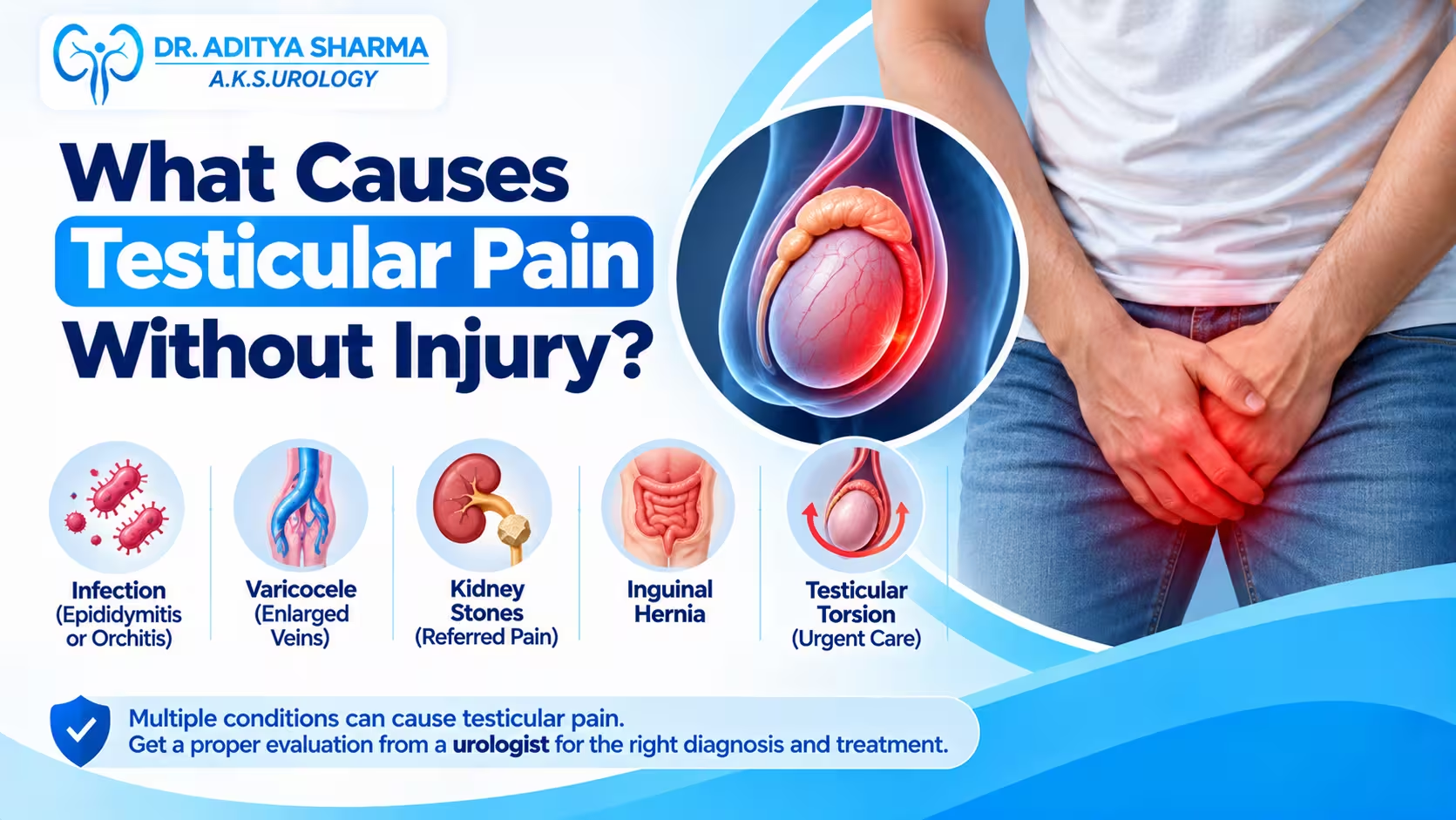
Testicular pain without an injury can stem from infections, fluid buildup or enlarged veins, referred pain from nearby areas, nerve or posture issues, or medical emergencies like testicular torsion.
What Causes Testicular Pain Without Injury?
Pain may begin in the testicle itself, in the nearby tubes and veins, or in another part of the body. These are some of the conditions that can cause it.
1. Epididymitis
Behind each testicle lies a very tiny, tightly twisted tube known as the epididymis. This structure acts as a storage for the sperm and moves it forward. The inflammation of this tube results in the condition called epididymitis.
The symptoms of this disease include pain on one side, tenderness, and swelling. The pain develops slowly without coming on suddenly. Some people may experience a burning sensation during urination, urge to urinate frequently, fever, and discharge from the penis.
Bacterial infections may be a cause of this disease. Epididymitis may sometimes occur due to sexually transmitted diseases, such as chlamydia and gonorrhoea, among others, especially among sexually active males.
2. Orchitis
Orchitis refers to the state of having inflamed, irritated, or swollen one or both of the testicles. A bacterial or viral infection could cause it. It can sometimes accompany another disorder called epididymitis.
Inflammation or irritation of the testicle could manifest itself as pain, swelling, or sensitivity. Other symptoms include fever and being unwell. One example of a virus that could cause this disease is mumps.
It is important to rule out other causes of pain. If the pain is acute and very severe, then it should be checked immediately.
3. Testicular Torsion
Testicular torsion is a condition that could be considered among the most dangerous ones to cause pain in males. It involves twisting of the cord that supplies the testicle with blood. Consequently, the blood flow becomes obstructed.
The onset of the pain is usually acute, and it is rather intense. The symptom manifests in one of the testicles and might be accompanied by symptoms such as inflammation, nausea, vomiting, abdominal pain, or displacement of one of the testicles.
This condition develops without an injury or any apparent cause. Testicular torsion is typical for teenagers and young males, although it can develop in other age groups as well. The treatment of this condition involves a surgical operation aimed at untwisting the cord.
4. Varicocele
The varicocele condition occurs as a result of swollen veins in the scrotal area. The varicocele is just like the varicose veins that form in the leg region.
Most men affected by varicoceles do not experience any pain. Some men experience mild pain, a heavy feeling, or a dragging sensation in their scrotum. This sensation may be intensified through standing for prolonged periods, engaging in exercise, and strenuous activities. The pain subsides when lying down.
The occurrence of varicoceles is more prevalent in the left testicle region. In some cases, the varicocele affects the quality of the sperm in men.
5. Inguinal Hernia
An inguinal hernia occurs when tissue (often part of the intestine) protrudes through a tear in the wall of the lower abdomen in the region of the groin. It usually bulges down to the scrotum, causing pain around the testicle.
A man may find a lump in the groin region, and there will be pain during coughing or lifting heavy objects. Sometimes the pain experienced may not be that severe.
When the herniated tissue is trapped and its blood supply is cut off, it is referred to as strangulation and requires urgent treatment. A painful lump, vomiting, or a hard, tender lump calls for emergency help.
6. Hydrocele and Spermatocele
Both are associated with a swelling around the testicle, but they differ from each other.
The hydrocele is an accumulation of fluid around the testicle that results in swelling or a sense of weight. The condition is usually painless, except in the case where there is a large hydrocele.
The spermatocele is a small fluid-filled sac found around the epididymis, close to the testicle. This condition is painless until it becomes enlarged, in which case a person experiences a sense of a lump or pulling sensation.
Both conditions are usually diagnosed by a simple clinical examination, supplemented with ultrasound scanning.
7. Prostatitis or Urinary Tract Infection
The prostate gland lies under the bladder and wraps around part of the duct that urine travels through. The inflammation or infection of the prostate gland is referred to as prostatitis.
Pain in the pelvic region, groins, or rectal region between the scrotum and anus can be experienced, or even in the testicles. It may also lead to painful or difficult urination. There might also be pain during ejaculation.
A UTI might also lead to pain that radiates towards the groins or testicles. Having a fever, difficulty urinating, a burning sensation when urinating, and frequent urination can indicate an infection.
8. Kidney Stones
A kidney stone need not necessarily be in the testicles for the person to feel pain in their testicles. If the kidney stone moves from the kidney into the tube that connects it to the bladder, there will be sharp pain on either the side or back of the body. It can extend further down to the groin and even to the testicles.
Such pain is known as referred pain, and it may occur in the testicle without any injury or problem in the testicle. There will be waves of pain that may be accompanied by nausea, vomiting, bloody urine, and increased desire to urinate.
9. Nerve or Pelvic Floor Problems
Pain sensation is transmitted through nerves from the lower part of the abdomen, the groin, and the pelvis. If irritation and entrapment happen to the nerve, then the pain will be felt in the scrotum or testicle.
Extended periods of sitting, past groin or pelvic surgery, and some back or nerve-related conditions have been associated with such pains. Pelvic floor muscles that are too tight can also trigger pain in the testicles, perineum, or lower abdomen areas.
Such pains can be episodic and can be very hard to diagnose unless through an appropriate medical examination, especially when there are no signs of swelling or changes.
10. Testicular Lump or Cancer
Testicular cancer is usually associated with the discovery of a painless lump or swelling rather than pain. Nevertheless, there can be some cases when men experience an aching sensation in their scrotum.
Any newly discovered lump, alteration in the size or shape of the testicle, or the feeling of increased weight in one of the testicles must be discussed with a doctor. However, pain itself cannot indicate the development of cancer; still, any changes in the testicle need to be considered seriously.
Why Does Pain Affect Only the Left or Right Testicle?
Pain on one side does not always point to one particular condition. Several problems can affect only one testicle.
Left testicle pain may be linked to a varicocele, as enlarged scrotal veins are more common on the left. Infection, a hernia, a kidney stone, or testicular torsion can also cause pain on this side.
Pain in the right testicle can have similar causes. Epididymitis, orchitis, a hernia, and torsion may affect the right side too. Pain from a kidney stone can also travel towards the right testicle.
The side alone cannot confirm the cause. The doctor will also ask when the pain began, how strong it is, and whether there is swelling, fever, or a change in urination.
What Does Testicular Pain Feel Like?
The type of discomfort can vary from one person to another. Some men feel a dull ache, while others experience sharp or sudden pain.
- Dull ache in testicle, no lump: This may occur with a varicocele, nerve irritation or referred pain. An examination is still needed if it continues.
- Pain when touching the testicle: Tenderness may occur with epididymitis, orchitis or other causes of swelling and inflammation.
- Pain with lower abdominal discomfort: This can occur with testicular torsion, kidney stones, a hernia or urinary problems.
- Pain that comes and goes: Some conditions cause discomfort that changes with activity or position. Pain that suddenly appears and then settles can still be a warning sign of intermittent torsion.
These patterns can offer clues, but they cannot replace a medical examination.
How Do Doctors Find the Cause of Testicular Pain?
The doctor will start by asking questions regarding the pain. Questions to be asked include where it comes from, how long it has been there, whether it appeared suddenly or not, and what relieves it or worsens it. The doctor may also ask for details regarding fever, urination, sexual history, recent infections, and previous surgeries.
The following step involves a physical examination of the abdomen, groin, and scrotum. The doctor may then recommend:
- Urine test: To look for signs of a urinary infection or other problem.
- Blood tests: To check for signs of infection or inflammation when needed.
- STI tests: If an infection passed through sexual contact is suspected.
- Scrotal ultrasound with Doppler: To look at the testicles, nearby tissues and blood flow.
- Urinary tract imaging: If a kidney stone or another problem higher up in the urinary tract is suspected.
If testicular torsion is strongly suspected, emergency treatment should not be delayed for tests.
How Is Testicular Pain Treated?
Treatment depends on what is causing the pain. There is no single tablet or home remedy that works for every case.
- Epididymitis or bacterial infection: The doctor may prescribe antibiotics after assessing the likely cause. The full course should be taken as advised.
- Orchitis: Treatment depends on whether it is caused by bacteria or a virus. Pain relief and rest may be advised, while bacterial infections may need antibiotics.
- Testicular torsion: Emergency surgery is needed to untwist the cord and restore blood flow.
- Varicocele: Mild cases may only need observation and support. Treatment may be considered if pain continues or fertility is affected.
- Hernia: Surgery may be advised depending on its size, symptoms and risk of complications. A strangulated hernia needs emergency treatment.
- Hydrocele or spermatocele: Small, painless cases may only need monitoring. Treatment may be considered if swelling becomes large or uncomfortable.
- Kidney stones: Treatment depends on the stone's size and position. It may include pain relief, medicines, or a procedure to remove the stone.
For mild discomfort, a doctor may suggest rest, supportive underwear or a wrapped cold pack. These steps are not a substitute for urgent care when pain starts suddenly or is severe.
Can You Relieve Testicle Pain at Home?
It is common to look for ways to relieve testicular pain immediately. This will depend on what causes the problem. At home, one cannot untwist a testicle, treat infections, or reduce a trapped hernia.
In case of mild pain, and after a doctor has excluded emergencies, the following actions might be taken:
- Stop engaging in vigorous physical activity or lifting heavy objects.
- Put on supportive underwear to prevent movement.
- Place ice packs, covered by a towel, on the affected areas for some time.
- Rest and avoid doing anything that worsens the condition.
- Take pain medications if applicable and recommended by a doctor.
Never manipulate, massage, or move the testicle to reduce pain. If the pain appears suddenly and is extremely painful or continues to worsen, one should seek immediate medical attention.
Why Choose Dr. Aditya K. Sharma for Testicular Pain Evaluation?
Dr. Aditya K. Sharma, a Urologist in Lucknow, provides evaluation and treatment for a range of urological conditions.
Testicular pain can originate from infections, inflammation, scrotal conditions or problems elsewhere in the urinary tract. Identifying the underlying cause through clinical examination and appropriate investigations is important for selecting the right treatment.
Dr. Aditya K. Sharma can evaluate persistent or recurring testicular discomfort and guide patients towards appropriate medical or surgical management based on their condition.
Related Treatments
Related Articles
-
Can Low Sperm Count Be Increased Naturally?
-
Blood in Urine but No Pain: What Could Be the Cause?
-
What Causes Kidney Stones? Common Reasons You Should Know
-
What Size of Kidney Stone Requires Surgery?
- What Should You Avoid Eating If You Have Kidney Stones?
Conclusion
Testicular pain without injury can result from infections, vein blockage, hernia, kidney stones, and several other causes. It is important to find out the reason behind such pain, particularly if they keep recurring. Any case of sudden or severe pain requires immediate attention, as it could be a case of testicular torsion. Men who suffer from such problems should consider visiting Dr. Adittya K. Sharma, a urologist in Lucknow with 20+ years of experience.
Frequently Asked Questions
1. Why does my balls hurt even though there was no injury?
It could be caused by infections, inflammation, swelling of blood vessels, a hernia, kidney stones, or irritation of nerves. It is possible to develop testicular torsion even without any injury, which requires immediate intervention.
2. Why does my left testicle hurt?
The causes of left-sided pain include varicocele, infection, hernia, kidney stone, or testicular torsion. The pain felt on a particular side does not give any clue about the exact cause, since the majority of cases involve the left testicle.
3. Why does my testicle hurt if I touch it?
Tenderness in the testicle might be a result of inflammation, infection, and swelling of surrounding tissues. If the pain started recently, persists, or is accompanied by swelling and fever, schedule an appointment with your doctor.
4. Is it possible to have kidney stones affecting the testicles?
Yes, if there are stones in the kidney, they may move down the ureter and cause pain that goes toward the groin and then to the testicles. The condition can be accompanied by side/back pain, nausea, and bloody urine.
5. When should you seek medical help for testicular pain?
You need immediate help for severe and acute pain, especially when there is also nausea and vomiting. You should consult your doctor for recurring pain, any swelling of the scrotum, any lumps, fever, and painful urination.
6. What drugs are prescribed to ease testicular pain?
Drugs depend on the causes of the problem. In case of bacterial infection, you may need antibiotics or other treatment. Do not take them or other medication without your doctor's permission. Don't use drugs to postpone emergency care for any acute pain.