
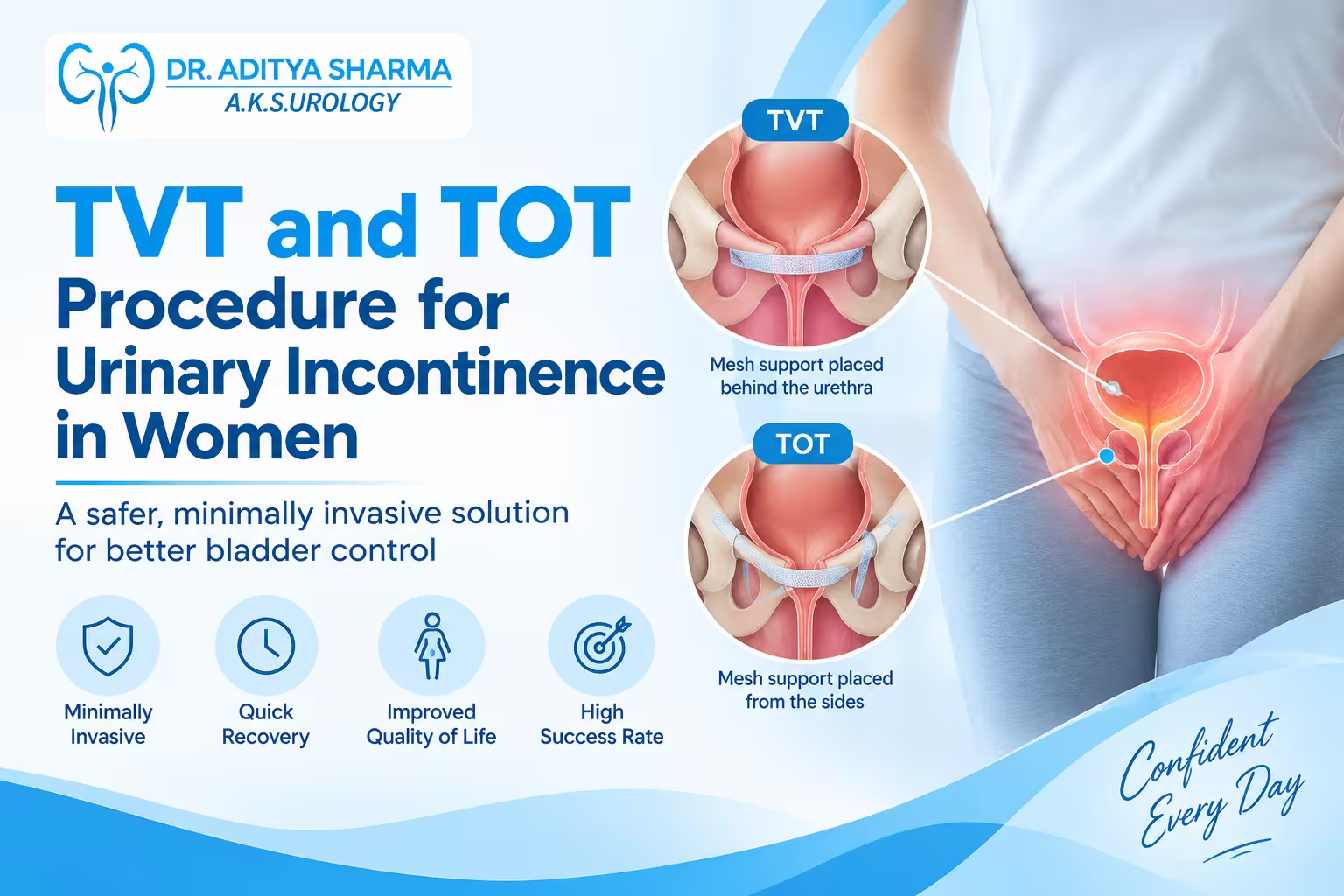
TVT (Tension-free Vaginal Tape) and TOT (Transobturator Tape) are minimally invasive surgical procedures used to treat stress urinary incontinence (urine leakage during coughing, sneezing, or exercising) in women by placing a supportive mesh sling under the mid-urethra.
What is stress urinary incontinence?
If you experience urine leakage when it is necessary to cough, sneeze, run, or lift something, the issue is often caused by stress incontinence.
Normally, the tissues and muscles surrounding the urethra assist in keeping it shut when pressure suddenly rises around the bladder. If this support is weak, a tiny amount of urine could escape.
The birth of a child and pregnancy are both typical causes but they're not the only reasons. Weight gain, ageing, pelvic floor weakness, as well as prior pelvic surgery may contribute to leakage of urine among women.
It is equally important to distinguish the two conditions: stress incontinence and urge incontinence. If you suffer from urge incontinence may experience a sudden need to flush and then leak prior to getting to the toilet. Women with both types. TOT and TVT are commonly utilized when there is urinary stress.
When is TVT or TOT surgery considered?
Surgery isn't always the first choice for treating stress incontinence.
Exercises for the pelvic floor are usually performed first, and then other treatments are based on the woman's condition. Some women do better with these exercises, so they don't require an operation.
However, if you're still bleeding despite treatment, or the issue is affecting your daily routine and routine, a sling treatment procedure could be discussed. For instance, you might have started to avoid exercise and wearing pads throughout the day and fretting about leakage when you cough or make a sneeze.
Before recommending surgery, the doctor will examine other symptoms of a urinary tract infection. This is vital because treating stress leakage may not always solve the urgency issue or any other bladder issues.
Suffering from Kidney or Urinary Problems? Get Expert Care Today
Don’t ignore symptoms like pain, difficulty in urination, or recurring infections. Early treatment ensures faster recovery and better outcomes.
What is TVT surgery?
TVT stands for Tension-Free Vaginal Tape. TVT is a type of mid-urethral sling surgery.
A tape is placed midway on the urethra. When you sneeze, cough, or exercise, it prevents the urethra from leaking urine.
For the standard retropubic TVT, tape is passed through the small vaginal opening and lies behind the pubic bone. It then exits the body through small abdominal openings.
The tape is not meant to squeeze the urethra. It "slings" supports the urethra when there is added pressure.
Before inserting a synthetic mid-urethral sling, a cystoscopy is done to check if there is perforation of the bladder.
What is TOT surgery?
TOT stands for Transobturator Tape.
TOT has the same function as TVT. The tape is placed to support the mid-urethra while coughing or sneezing, which increases pressure on the bladder.
The main difference is the placement.
In the TOT technique, the tape passes through the obturator portion of the pelvis and comes out close to the inner thigh instead of going behind the pubic bone.
Therefore, if anyone asks about TVT vs TOT, the best way to answer (based on what has been explained) is that both techniques support the same region, but they have different routes to achieve this.
Timely Treatment Can Prevent Serious Complications
Advanced minimally invasive procedures help you recover faster with less pain and better results. Consult an experienced urologist today.
TVT vs TOT: Which one is better?
This is not a simple “one is better for everyone” situation.
Both procedures can improve stress urinary incontinence, but current evidence does show some differences. The EAU guideline reports that retropubic slings have better long-term continence outcomes than transobturator slings. At the same time, the retropubic route has a higher risk of bladder perforation and voiding problems, while the transobturator route is more likely to cause groin pain.
An earlier systematic review of 28 randomised trials found no significant difference in overall cure rates between TVT and TOT, which is why both procedures have continued to be used. However, the longer-term evidence and newer guideline recommendations give more weight to the retropubic route in many women.
|
TVT |
TOT |
|
Tape passes behind the pubic bone |
Tape passes through the obturator region |
|
Higher risk of bladder perforation during insertion |
Lower risk of bladder perforation |
|
Voiding difficulty can occur |
Groin or inner-thigh pain is more common |
|
Better long-term continence outcomes in current evidence |
Can still be effective in selected women |
This does not mean every woman should have TVT. Previous surgery, anatomy, other urinary symptoms, and individual risk factors all need to be considered before choosing the procedure.
How is the TVT or TOT procedure done?
The surgery is performed under anaesthesia.
A small incision is made inside the vagina and the tape is placed underneath the mid-urethra. The surgeon then passes it through the appropriate route.
For TVT, the tape goes behind the pubic bone. For TOT, it goes through the obturator region.
Once the tape is positioned properly, the small incisions are closed. The procedure is usually short, and some women can go home on the same day or after a short period of observation.
16,000+ Successful Surgeries. Trusted Urology Care
Get accurate diagnosis and advanced treatment for kidney stones, prostate issues, and urological conditions.
What happens before sling surgery?
Before deciding on female urinary incontinence surgery, your doctor will first make sure that the leakage is actually due to stress incontinence.
You may be asked when you leak, how often it happens and whether you also have urgency, frequent urination or difficulty emptying your bladder.
A physical examination and urine test may be advised. Your doctor may also check how much urine is left in the bladder after you pass urine.
Urodynamic testing is not required for every woman. It may be considered when the diagnosis is uncertain or when there are mixed or complicated symptoms.
The aim is to understand the whole urinary problem before deciding on a procedure.
What is recovery like after TVT or TOT?
Most women can go home the same day or after a short stay, depending on their recovery.
There may be some soreness or mild bleeding for a few days. After TOT, discomfort around the groin or inner thigh can also occur.
One thing your doctor will check is whether you can pass urine properly after surgery. Temporary difficulty emptying the bladder can happen, and a catheter may be needed for a short time if you cannot urinate normally.
You can usually start with light activity, but heavy lifting and strenuous exercise should wait until your doctor feels that you have healed enough. You will also be advised when it is safe to resume sexual activity.
Suffering from Kidney or Urinary Problems? Get Expert Care Today
Don’t ignore symptoms like pain, difficulty in urination, or recurring infections. Early treatment ensures faster recovery and better outcomes.
What are the risks of TVT and TOT?
As with any operation, TVT/TOT surgery has some risks.
These can include urinary infection, bleeding, pain, difficulty passing urine, bladder injury and new or increased urinary urgency. The original leakage may also persist or return later.
Because these procedures use a synthetic mesh sling, mesh exposure or erosion is another possible complication. Although uncommon, it can sometimes require further treatment.
The risks are not exactly the same with both procedures. With TVT, bladder perforation and temporary voiding problems are more of a concern. With TOT, groin or inner-thigh pain is seen more often.
These risks should be discussed properly before surgery, along with non-mesh alternatives.
Can TVT or TOT stop urine leakage permanently?
Most women achieve good long-lasting results with mid-urethral slings, but no surgery ensures you will never leak again.
The results also depend on your stress incontinence severity, previous surgeries, other pelvic floor conditions, and other bladder symptoms.
One example would be if you have urge incontinence. Even with a sling you may not Urge leak, but you may still feel the urgency to go.
That is why all your symptoms should be assessed prior to surgery.
Timely Treatment Can Prevent Serious Complications
Advanced minimally invasive procedures help you recover faster with less pain and better results. Consult an experienced urologist today.
Are there alternatives to TVT and TOT?
Yes. A sling is not the only option for stress incontinence treatment.
Pelvic floor muscle training may be enough for some women. Depending on the situation, a vaginal pessary or urethral bulking treatment may also be considered.
If surgery is needed, other options include an autologous fascial sling and Burch colposuspension. These do not use the same synthetic mid-urethral mesh.
The choice should be based on your symptoms, previous treatment, and your preference after understanding the benefits and risks of each option.
When should you see a urologist?
If you frequently urinate while coughing or sneezing, laughing, or working out, it's important to have the issue examined rather than merely managing it with pads.
It is possible that you do not require surgery. However, if pelvic floor exercises or other treatments haven't been effective and the leakage is affecting your daily life, then TVT or TOT might be discussed as an option in your treatment.
The first step is to figure out the type of leakage you have.
16,000+ Successful Surgeries. Trusted Urology Care
Get accurate diagnosis and advanced treatment for kidney stones, prostate issues, and urological conditions.
Why Choose Dr. Aditya K. Sharma for Urological Care in Lucknow?
When urinary incontinence is affecting your daily life, evaluation by an experienced urologist can help identify the underlying cause and determine an appropriate treatment plan.
Dr. Aditya K. Sharma, Urologist & Kidney Transplant Specialist in Lucknow, has more than 20 years of experience and has performed 16,000+ surgeries. His practice covers a wide range of urological conditions, including urinary incontinence, recurrent urinary tract infections, bladder conditions, kidney stones, prostate disorders, reconstructive urology, and minimally invasive urological procedures.
Dr. Sharma's treatment approach focuses on accurate evaluation, appropriate investigations, and individualized treatment planning. For women experiencing urinary leakage, the cause and type of incontinence should be assessed before deciding whether conservative treatment, medication, sling surgery, or another approach is appropriate.
If you are experiencing persistent urinary leakage or symptoms of stress urinary incontinence, consultation with Dr. Aditya K. Sharma, Best Urologist in Lucknow, can help you understand the available diagnostic and treatment options.
Related Treatments
- BMG Urethroplasty
- VVF Repair Surgery
- Pyeloplasty Surgery
- Cystolithotripsy Surgery
- Cystolithotomy Surgery
- HoLEP Surgery
Suffering from Kidney or Urinary Problems? Get Expert Care Today
Don’t ignore symptoms like pain, difficulty in urination, or recurring infections. Early treatment ensures faster recovery and better outcomes.
Related Articles
- 10 Ways for Kidney Stone Treatment Without Surgery
- Kidney Stone Treatment Cost in India
- Berberis Vulgaris for Kidney Stones
- Best Cream for Balanitis: Which Cream Works Best for Penis Infection?
- DJ Stent: Procedure, Benefits, Side Effects & Recovery Time
Conclusion
TVT and TOT are mid-urethral sling procedures used mainly for stress urinary incontinence. Both support the urethra, but they use different routes. TVT generally has better long-term continence results, while TOT has a lower risk of bladder injury but more groin pain. The right choice depends on your symptoms and individual situation.
With over 20 years of experience in urology and minimally invasive procedures, Dr. Aditya K. Sharma evaluates the cause of urinary leakage before recommending the most suitable treatment.
Timely Treatment Can Prevent Serious Complications
Advanced minimally invasive procedures help you recover faster with less pain and better results. Consult an experienced urologist today.
FAQs
What is the average time the slinging of TOT or TVT typically lasts?
The sling is made to offer long-term support and is not required to be replaced after a certain time. But there are women who experience recurring leakage or develop another sling-related issue afterward.
Will TOT surgery or TVT surgery impact future pregnancy?
If you're planning another pregnancy, talk about this with your doctor prior to having surgery to sling. Childbirth and pregnancy can put more pressure upon the pelvic floor and can affect the results of previous continence procedures.
Can I get TOT or TVT if I have undergone an incontinence surgery?
It could be, however, that the final decision requires more thorough evaluation. The previous treatment, the symptoms at present, and the reason behind the frequent leaks will be assessed prior to deciding on a different treatment.
What happens if the sling creates issues later on?
Treatment is contingent on the issue. Certain issues can be addressed without surgery. However, chronic pain, difficulty in passing urine, or exposure to mesh may require additional treatment.
Can TOT or TVT be performed to prevent moderate urine leakage?
It is possible to consider it for women who are not able to afford it, but surgery is usually not the first choice for mild incontinence. Pelvic floor exercises, as well as other non-surgical options, are typically tried initially.