
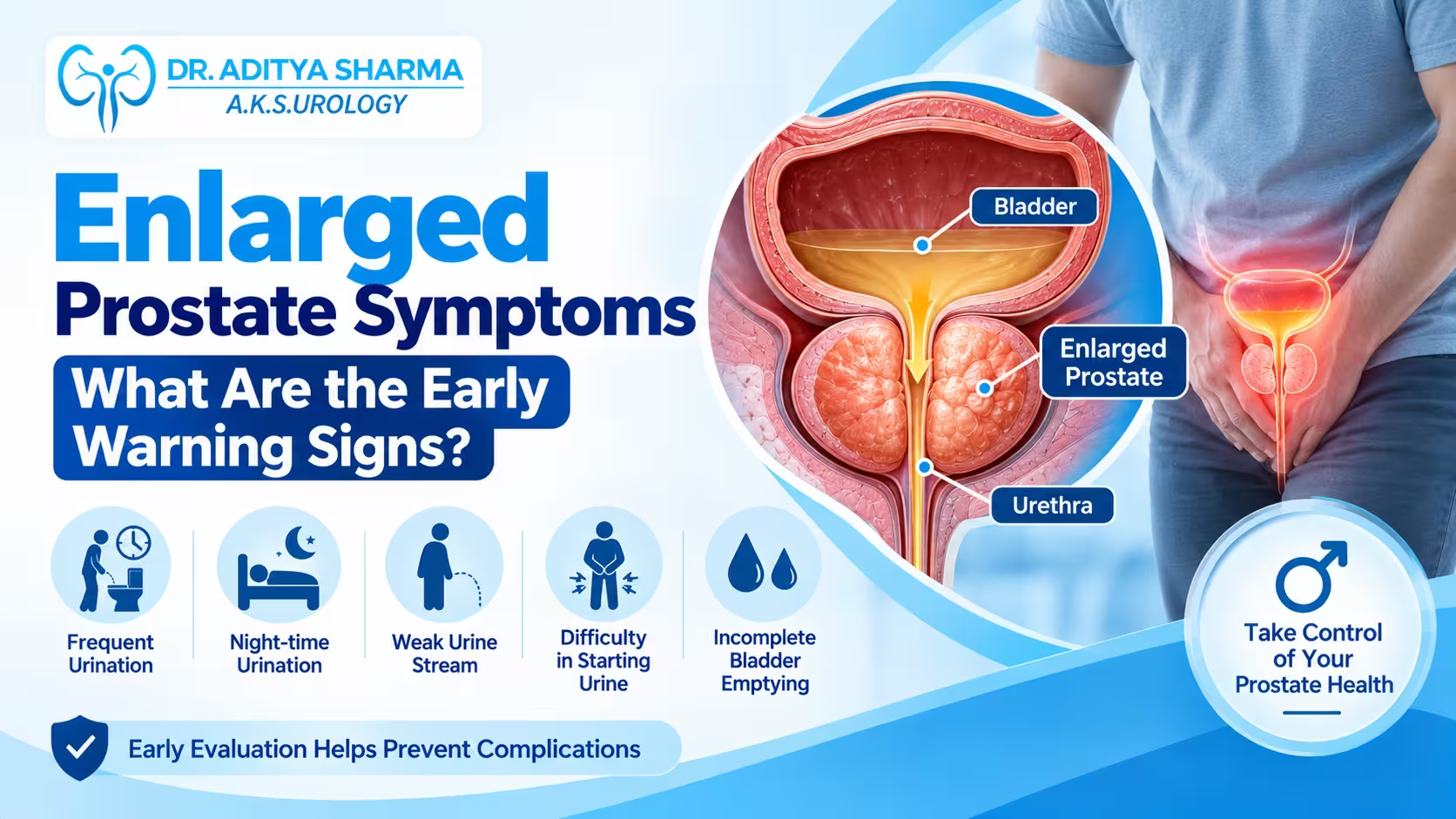
The early warning signs of an enlarged prostate—known medically as benign prostatic hyperplasia or BPH—are changes in urination caused by the growing gland pressing against the urethra.
What happens when the prostate gets bigger?
The prostate is located below the bladder and surrounds the urethra.
The urethra serves as the exit route for both urine and seminal fluid. The prostate can grow to obstruct or restrict the urethra. The bladder will then have to push harder to empty, and urination can cause discomfort. The changes can be noticed while urinating.
Prostate enlargement is a normal occurrence, but the degree of enlargement cannot predict how bothersome the urinary symptoms will be.
Some men with a relatively small prostate can have troublesome urinary symptoms. Others, with a large prostate, can have relatively few troublesome urinary symptoms.
What are the first signs of an enlarged prostate?
The early symptoms are usually related to passing urine. They may come slowly, which is why many men do not pay much attention to them at first.
1. Your urine stream is weaker than before
You might realize that the force with which the urine comes out has decreased.
The flow of urine may be weaker, slower, or even irregular. It may also take you longer than usual to urinate as your bladder needs more time to be emptied.
Should this be a gradual process, one cause of this change could be the enlargement of the prostate.
2. You have to wait before the urine starts
You feel that your bladder is full and you are ready to urinate, but the urine does not start straight away.
You may have to stand there for several seconds before the flow begins. This is known as urinary hesitancy and is a common complaint in men with an enlarged prostate.
3. The urine flow stops in between
Instead of one continuous stream, the urine may come out, stop and then start again.
Some men notice this more when their bladder is very full. Others find that it happens almost every time they use the toilet.
A stop-and-start stream becomes more important when it occurs together with a weak flow or difficulty starting urination.
4. You are visiting the toilet more often
Perhaps you used to visit the washroom every few hours, but now your urge to urinate comes on a lot quicker.
You may catch yourself searching for the washroom when travelling or avoiding places where there is no easy access to toilets. It could be one of the first signs of BPH.
But frequent urination doesn’t always come from the prostate. Conditions such as high blood sugar, urinary infections, excess intake of caffeine, medications, and bladder disorders can also bring it about.
5. You suddenly cannot hold your urine for long
The other change that takes place is a strong and abrupt desire to urinate.
You will have a feeling that you have to rush to the toilet urgently. In some instances, the urge to urinate is so overwhelming that one finds it very hard to retain the urine.
This condition is referred to as urinary urgency. It results from prostate enlargement due to sensitivity of the bladder to resistance.
6. You are getting up at night to urinate
One of the complaints men commonly notice is having to leave bed to use the toilet.
Getting up once in a while is not necessarily a problem. But if you are waking up two, three or more times every night, your sleep can suffer.
You may feel tired during the day simply because your sleep is being broken again and again. Night-time urination is called nocturia and can occur with BPH as well as several other conditions.
7. You still feel that urine is left in your bladder
You complete your urination but still feel that something is left behind.
You might even sit for some more time and try once more to urinate more urine. This sensation is called incomplete bladder emptying.
This is because your bladder might be unable to expel all urine through the constricted urinary passage. Accumulation of considerable amounts of urine will increase the risk of developing infections and other bladder conditions.
8. A few drops leak after you finish
You might feel that you have completed urinating and walked away from the toilet only to find some drops of urine on your underpants afterward.
This condition is known as post-urination dribbling. It is quite simple to overlook since the quantity of urine is always small.
However, if you observe that it is becoming frequent lately, especially when you have a weak urine flow, consult your physician.
Are there signs that an enlarged prostate is becoming a bigger problem?
Yes. Sometimes the symptoms gradually become more troublesome.
For example, you may find that urination is taking much longer, you are waking up repeatedly at night, or you are constantly feeling that your bladder is full.
Some men can also develop:
- Repeated urinary infections
- Blood in the urine
- Increasing difficulty passing urine
- Urine leakage
- Bladder stones
- A large amount of urine remaining in the bladder
In more serious cases, the prostate can block the urine passage to the point that urine cannot come out at all.
When is difficulty passing urine an emergency?
Seek emergency medical assistance if you have the sudden and intense urge to urinate but can't. This is called acute urinary retention. An overfull bladder can be very painful and can also cause damage. It is usually emptied by a medical professional.
Continue drinking water in hopes that your bladder will empty? No. You should head to the emergency room.
Fever and chills are also reasons to seek immediate medical help if you are having trouble passing urine. This is especially the case if you have an existing prostate or other urinary issues.
Does every urinary symptom mean the prostate is enlarged?
No.
This is something men often overlook. A weak stream, frequent urination or burning while passing urine can have several causes.
For example, similar symptoms may occur with:
- Urinary tract infection
- Prostatitis
- Urethral narrowing
- Bladder stones
- Kidney stones
- Diabetes
- Certain medicines
- Other bladder or prostate conditions
This is why it is not a good idea to assume that every change in urination is due to BPH.
How does a doctor find out if the prostate is causing the problem?
The doctor will first ask about your symptoms. You may be asked how often you urinate during the day, how many times you wake up at night, whether your stream has changed, and whether you feel empty after urination.
A few tests may then be advised depending on your symptoms.
|
Test |
What it tells the doctor |
|
Urine test |
Can show infection or blood in the urine |
|
Ultrasound |
Shows the prostate, bladder and urinary tract |
|
PSA blood test |
May be advised as part of prostate assessment |
|
Urine flow test |
Measures the speed and pattern of urine flow |
|
Post-void residual test |
Shows how much urine is left after urination |
|
Prostate examination |
Helps assess the size and feel of the prostate |
Not everyone needs all of these tests. Your urologist will decide what is useful based on your symptoms and medical history.
Can mild prostate symptoms be managed without surgery?
Yes. Surgery is not always the case for an enlarged prostate.
Typically, the doctor will only recommend surgery if the symptoms are very troublesome or there is blockage or retention with infection or other complications. Sometimes doctors will recommend that patients try to treat it naturally or take medications for a while first to see how effective that is. This may include reducing the consumption of caffeine and alcohol, and large fluid intake before bed.
If blockage and retention are not very bothersome, or if treating it naturally or with medications is not working, doctors may recommend surgery. Generally, the focus of treatment is the symptoms, not the size of the prostate.
When should you get your prostate checked?
Do not wait until you are struggling to pass urine every time.
Make an appointment with a urologist if you have noticed a persistent change such as:
- A weaker urine stream
- Difficulty starting urine
- Frequent urination
- Waking up several times at night
- Sudden urgency
- Dribbling after urination
- A feeling that the bladder is not empty
- Repeated urinary infections
You should seek urgent care if you cannot pass urine at all, develop severe pain, or have fever and chills along with urinary symptoms.
Why Choose Dr. Aditya K. Sharma for Prostate Care in Lucknow?
If you are experiencing changes in urination, persistent urinary symptoms or signs that may be associated with an enlarged prostate, proper evaluation can help identify the underlying cause and determine an appropriate treatment approach.
Dr. Aditya K. Sharma, Best Urologist in Lucknow, Urologist & Kidney Transplant Specialist, provides urological care for prostate and urinary conditions. His practice includes treatment options for prostate-related conditions, including procedures such as HoLEP Surgery and TURP Surgery.
Dr. Aditya K. Sharma can evaluate symptoms such as weak urine flow, frequent urination, difficulty starting urination, nighttime urination and incomplete bladder emptying and recommend appropriate investigations and treatment based on the individual patient's condition.
If you are experiencing persistent symptoms of an enlarged prostate, consulting Dr. Aditya K. Sharma, Best Urologist in Lucknow, can help you understand the possible cause of your symptoms and available treatment options.
Related Treatments
Related Articles
- 10 Ways for Kidney Stone Treatment Without Surgery
- Kidney Stone Treatment Cost in India
- Berberis Vulgaris for Kidney Stones
- Best Cream for Balanitis: Which Cream Works Best for Penis Infection?
- DJ Stent: Procedure, Benefits, Side Effects & Recovery Time
Conclusion
The early signs of an enlarged prostate can be easy to overlook because they usually appear slowly. A weaker urine stream, taking longer to start, frequent urination, night-time bathroom visits, and incomplete bladder emptying are some of the changes men commonly notice. Dr. Aditya K. Sharma, with over 20 years of experience in urology, evaluates these symptoms to find the actual cause and decide whether medicines, monitoring or a prostate procedure is needed.
FAQs
Is having to wake up once a day to urinate a symptom of an enlarged prostate?
This is not always true. It could be because of various reasons, but if you keep having more frequent trips during the night, or the trips at night are becoming more frequent, it is advisable to find out the reason for that.
Can an enlarged prostate cause burning sensation while urinating?
The BPH condition itself does not usually cause a burning sensation. The burning sensation may indicate either a urinary infection or some other problem related to urination and therefore should be investigated.
Can the condition of the prostate gland worsen if it is left untreated?
It might. Some men stay stable for years without complications, while others experience worsening of their symptoms and develop more complicated conditions.
Will the size of the prostate affect the severity of the symptoms?
Not necessarily. A patient suffering from moderate prostate enlargement may have serious urination difficulties, whereas a person having a bigger prostate gland may have minor complaints. It all depends on the symptoms and the degree of bladder emptying.
Is it possible to treat an enlarged prostate without surgery?
Yes, depending on the symptoms, the treatment can consist of lifestyle modifications, medications, or other procedures. Surgery can be recommended in case of severe symptoms, lack of effect of drugs, or development of complications.