
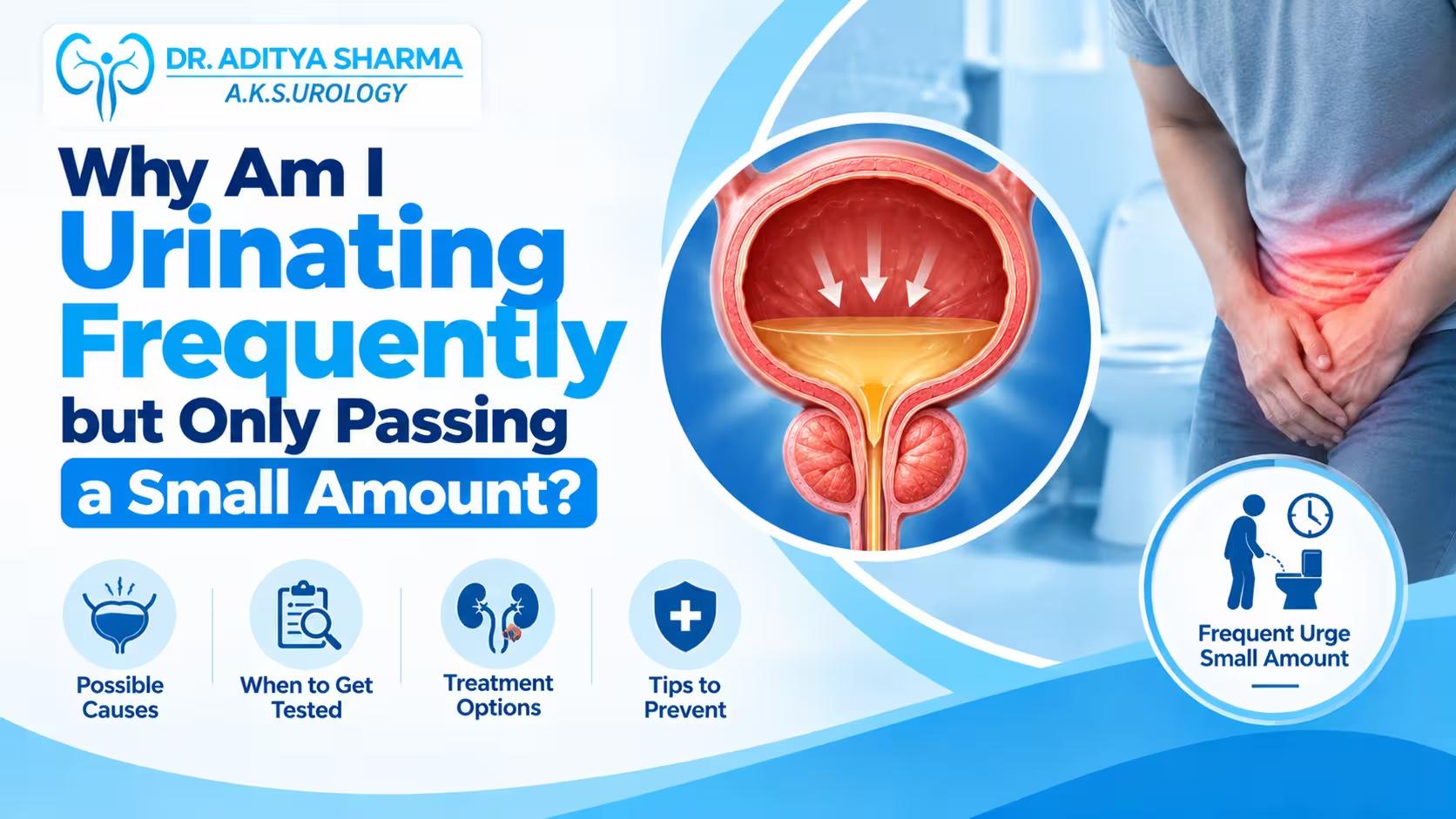
Urinating frequently while passing only small amounts typically happens when bladder irritation or muscle overactivity makes you feel an urgent need to empty even when the bladder isn't full.
Why Do I Feel Like I Need to Pee Again and Again?
It does not require a full bladder to have the urge to urinate. If the bladder is irritated, the urge will occur well before its time. That is the reason one feels desperate to use the bathroom and ends up urinating small amounts of urine.
There might be no problem with the bladder. If the urine fails to come out well enough, some will remain, which means that the need to urinate again comes shortly after. Many conditions accompany frequent urination.
What Causes Frequent Urination With Only a Small Amount of Urine?
There are several possible reasons. Some are common and easy to treat, while others need a urologist's attention. The symptoms that come with frequent urination often give a better idea of what's going on.
1. Urinary Tract Infection
A UTI is one of the first things doctors think about when a patient suddenly starts needing to pee often. The bladder gets irritated by the infection and thinks there’s still urine in it, so it keeps signaling for more. Because of the infection, it’s unable to fully empty.
Burning when urinating is very common. There may also be cloudy or bloody urine. A strong urine odor may also be present. A person may also have pain or heaviness in the lower abdomen. These symptoms, along with the urgent need to urinate, may be the only symptoms for some people. For others, especially children, the sudden urge to urinate may be the only symptom.
2. Overactive Bladder
A UTI will always be the first consideration when a patient starts requiring to urinate frequently. This happens due to the irritation caused to the lining of the bladder that sends a constant signal for the need to urinate even when the amount of urine present is very low.
There is often burning involved in UTIs. Other symptoms include pain in the lower abdominal region, cloudy urine, bad odor, and blood in the urine. However, not all patients experience the same symptoms. In some cases, the need to urinate frequently is the major symptom.
3. Enlarged Prostate
For men, an enlarged prostate is a common reason for changes in urination, particularly with increasing age. The prostate sits around part of the tube that carries urine out of the bladder. When it becomes larger, it can narrow that passage and make urine flow more slowly.
That can leave some urine behind. The person may finish peeing but still feel as if there's more left. Frequent urination, a weak stream, difficulty getting started, dribbling, urgency, and several night-time bathroom visits are common signs.
4. Urinary Retention
Urinary retention is the inability to empty the bladder. As surprising as it may seem, a patient with urinary retention may actually urinate very often. This is because there will always be some urine left in the bladder every time he/she uses the bathroom.
The urge returns quickly, but there is only little urine released. The causes for this are an enlarged prostate gland, a narrowed urethra, bladder stones, certain drugs, and sometimes nerve issues in the bladder.
An inability to urinate suddenly is another condition that requires medical attention immediately.
5. Bladder Stones
Bladder stones can irritate the bladder and sometimes interfere with the normal flow of urine. A person may need to pee more often, feel a sudden urge, have pain while urinating, or notice blood in the urine.
The pain isn't always severe. Sometimes the first clue is simply that the usual pattern of urination has changed. If the stone gets in the way near the bladder outlet, emptying the bladder can become difficult.
6. Prostatitis
Prostatitis is inflammation of the prostate. It can make a man feel like he needs to pee more often or rush to the bathroom. Burning during urination can happen too.
Pain may be felt in the lower abdomen, pelvis, lower back, or around the genital area. Some cases start suddenly, while others can cause problems for a longer time. The treatment depends on what's causing the prostate inflammation.
7. Urethral Stricture
The urethra is the tube through which urine leaves the body. If scar tissue makes this tube narrower, urine has less room to pass through. The stream may become thin or weak, and starting urination may take more effort.
The bladder may also fail to empty. That can leave a person feeling that they need to go again even though they have just used the toilet.
8. Diabetes
Diabetes can make a person urinate more often. When blood sugar is too high, the kidneys remove some of that extra sugar through the urine. This pulls more water into the urine and can lead to larger amounts of urine.
That's an important difference. Diabetes usually causes a person to pass more urine, rather than just a few drops each time. However, diabetes that has been present for many years can affect the nerves that control the bladder, making it harder for some people to empty properly.
9. Caffeine, Fluids and Medicines
Sometimes the reason is much less complicated. Coffee, tea, energy drinks, and other caffeinated drinks can make some people urinate more often. Drinking a large amount of fluid in a short time can have the same effect.
Medicines can change urination too. Water tablets, for example, are meant to increase urine production. Some other medicines can make it harder to empty the bladder. So if the problem started after a new medicine was added, that's worth mentioning to the doctor.
Is Frequent Urination With a Little Urine a Sign of a UTI?
This can be so. There is an increased urge to urinate in a person suffering from a UTI; however, the amount of urine that comes out is very little. Burning sensations, pain in the lower abdomen, cloudiness of urine, strong urine odor, and blood in urine are some conditions that increase the risk of developing an infection.
However, frequent urination does not necessarily mean that there is an infection in the urinary tract. If there is no infection according to urine tests, then other reasons for frequent urination should be investigated. These reasons include overactive bladder, enlarged prostate, bladder stones, or inability to empty the bladder properly.
When Should Frequent Urination Be Checked?
It is normal to go to the bathroom more often if you have had a lot of tea or water. You should be concerned if the change happens and you do not know the reason. A good reason to be concerned is if the change makes it hard for the person to function normally or if it wakes the person up at night.
Some symptoms require you to contact your doctor. A good reason to call your doctor is if you have a fever or chills, or if you have blood in your urine and a burning feeling when you urinate.
There is one symptom where you need to contact your doctor right away. If someone is not able to urinate at all and has pain, swelling, and pressure in the lower part of the stomach, you need to take them to a doctor right away.
How Does a Doctor Find Out What's Causing It?
The doctor begins by asking about a person’s regular urination pattern. How often do they urinate? How much urine do they produce? Do they experience burning? Is the stream weak? Are they waking up to urinate? These questions seem simple, but often provide very helpful information.
Tests may include a urine test to check for an infection or to see if there is blood in the urine. Sometimes a culture of the urine may be done to see if there are bacteria in the urine. Blood tests may also be done to test the function of the kidneys. An ultrasound may also be done to evaluate the function of the kidneys and the bladder.
One test that is very useful when evaluating if the bladder is emptying is called a post-void residual. This test evaluates to see if there is urine remaining in the bladder after the person has urinated. Men who have continued urinary symptoms may also have their prostate examined and/or have a test of their urine flow.
How Is Frequent Urination Treated?
The treatment is based on the causes of the disease. A bacterial infection can be treated with the help of antibiotics. Overactive bladder can be treated using bladder retraining, pelvic floor exercises, modification of liquid intake, and medications, if required.
An enlarged prostate is another type of condition that requires another approach. While some patients respond well to medication, others require a procedure or even surgery in case of serious symptoms or urine retention in the bladder. Bladder stones and a narrow urethra also have to be treated according to the real causes.
It's wrong to try to treat frequent urination by reducing fluid intake. Such an approach doesn't work because the body requires a certain amount of fluids, and it might cause other health problems.
What Can Be Done at Home?
Drink water normally throughout the day and don’t just drink a ton of water all at once. Don’t get discouraged and just stop drinking water. If coffee, tea, or energy drinks make the urge to go more, try drinking less of that and see if it helps.
A simple diary can help. Note the times you go, approximately how much you go, whether it hurts when you go, and how many times you get up to go at night over a few days. Your doctor can really use a record like that to see what the issue is.
Don't use leftover antibiotics for this issue. Antibiotics won't do anything if you have an enlarged prostate, overactive bladder, bladder stone, or are having urinary retention.
Why Choose Dr. Aditya K. Sharma for Urinary Problems in Lucknow?
Frequent urination with only a small amount of urine can have several possible causes. Identifying the underlying problem is important before deciding on treatment.
Dr. Aditya K. Sharma, Best Urologist in Lucknow, Urologist & Kidney Transplant Specialist, provides urological evaluation and treatment for urinary, kidney stone, prostate and other urological conditions.
Dr. Aditya K. Sharma can evaluate symptoms such as frequent urination, weak urine flow, difficulty starting urination, urinary urgency, incomplete bladder emptying and urinary pain and recommend appropriate investigations based on the patient's condition.
His practice includes minimally invasive procedures and treatments for conditions such as kidney stones and prostate-related urinary problems.
If you are frequently urinating but passing only a small amount each time, consulting Dr. Aditya K. Sharma, Best Urologist in Lucknow, can help identify the possible cause and determine an appropriate treatment approach.
Related Treatments
- HoLEP Surgery
- TURP Surgery
- RIRS Surgery
- Laser URSL Surgery
- Cystolithotripsy Surgery
- Cystolithotomy Surgery
Related Articles
- Kidney Stone Treatment Cost in India
- Berberis Vulgaris for Kidney Stones
- Best Cream for Balanitis: Which Cream Works Best for Penis Infection?
- DJ Stent: Procedure, Benefits, Side Effects & Recovery Time
- Enlarged Prostate Symptoms: What Are the Early Warning Signs?
Conclusion
Urgency with small volumes of urine might be caused by several factors. It could be a result of a UTI, but an overactive bladder, an enlarged prostate, bladder calculi, a urethral stricture, urinary retention, diabetes, or medications might also lead to such an effect. Other signs should not be overlooked, as urinary problems might not always mean an infection. Dr. Adittya K. Sharma is an experienced surgeon with more than 20 years of working experience and over 16,000 successful surgeries.
Frequently Asked Questions
Why do I feel like I need to pee every few minutes but only a little comes out?
UTIs can definitely cause symptoms of an overactive bladder, but many other conditions can cause the same thing. The presence of burning or pain with urination, a weak urine stream, and the feeling of still being full after urinating are other symptoms that can help with the cause.
Why am I peeing frequently at night but only passing a small amount?
Each of the conditions, such as enlarged prostate, overactive bladder, and inability to empty the bladder properly, can cause nocturia. In addition, excessive intake of liquids before going to bed and caffeine can aggravate the condition.
Is it normal to urinate frequently but only pass a little?
It happens sometimes. But when it continues to happen, there is always some reason that needs to be discovered. Burning sensation, pain, presence of blood in the urine, weak flow, and the inability to empty your bladder should not be ignored.
Can an enlarged prostate make a man urinate frequently?
Yes. The enlargement of the prostate gland causes narrowing of the urinary tube, which makes it difficult for a person to urinate properly. A patient will experience symptoms such as frequent urination, difficulty in starting urination, weak urine stream, among others.
Does frequent urination always mean a UTI?
Not necessarily. A UTI is just one possibility. Overactive bladder syndrome, an enlarged prostate gland, bladder stones, urethral stricture, urinary retention, diabetes, and certain drugs could be causes as well.