
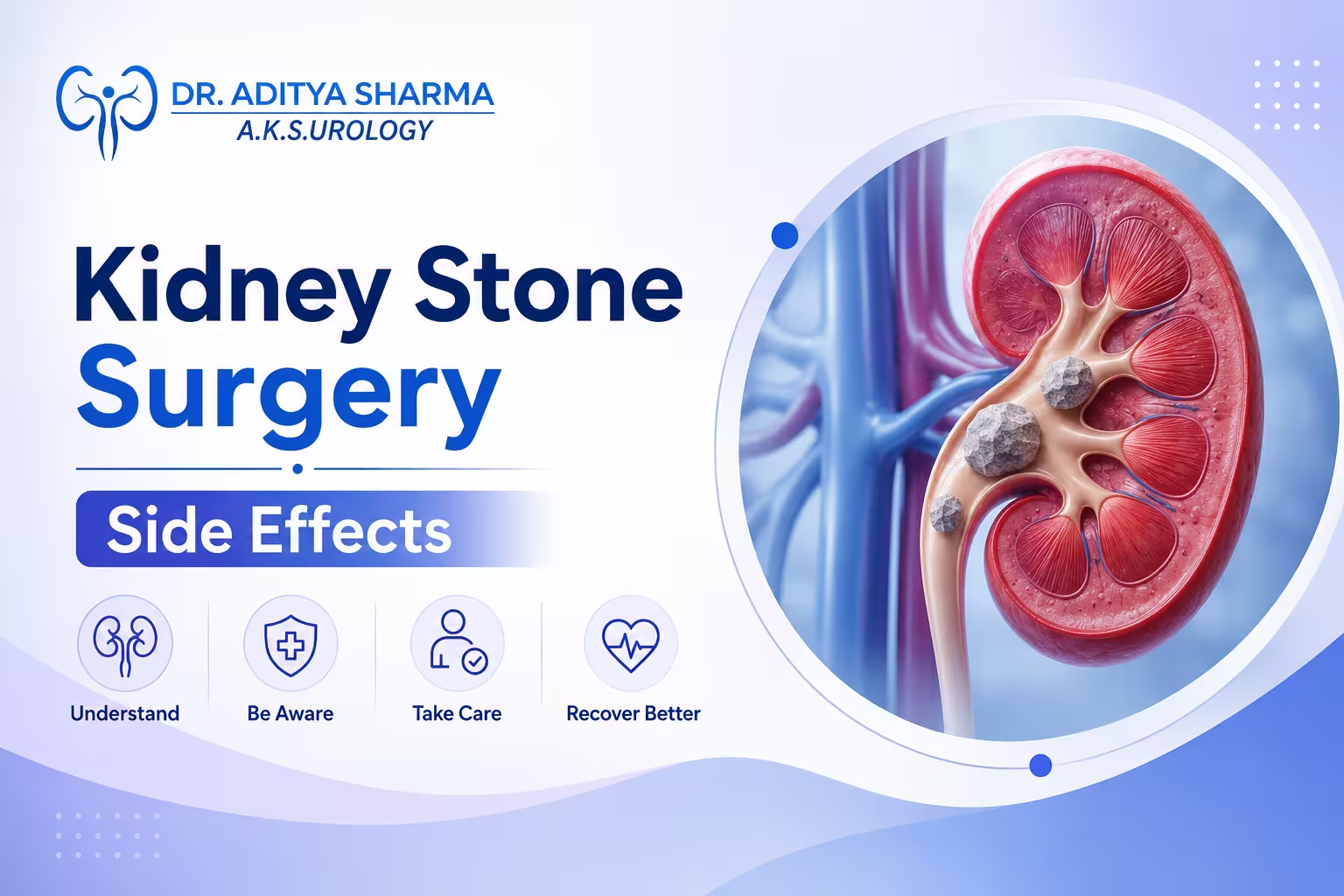
Here is what you should expect as a patient undergoing kidney stone surgery. Every patient wants to understand what side effects they should expect. The advantage for you is that modern kidney stone treatment is mostly minimally invasive and safely performed. Certain side effects of kidney stone surgery are common after any medical procedure and are only experienced in the post-operative phase. Certain side effects that you should expect include seeing blood in the urine, a burning pain each time you urinate, and stent discomfort combined with mild bladder or back pain. You should expect all of these side effects to fully resolve with time and appropriate aftercare in a matter of days to weeks.
Is Kidney Stone Surgery Safe?
Today there are various surgical options available that help with the removal of kidney stones, and these options are now much safer than they used to be. The options include: Shock Wave Lithotripsy (ESWL), Ureteroscopy (URS), Retrograde Intrarenal Surgery (RIRS), Percutaneous Nephrolithotomy (PCNL). The options address the stones with minimal incision, leading to shorter stays in hospitals and faster recovery times.
With any kind of surgery, it is good to know that while complications are uncommon, they are possible. Knowing the common after effects of surgery helps patients know what to expect.
Common Kidney Stone Surgery Side Effects
The majority of side effects are short-term and get better after the urinary tract is healed.
Blood in the Urine (Hematuria)
A slight or light pink-red urine for a couple of days following surgery to remove kidney stones is not uncommon.
The urinary tract is slightly inflamed throughout the process.
Seek medical attention if:
- The bleeding is still heavy
- Blood clots of a large size appear.
- Bleeding is increasing rather than improving
Burning During Urination
The sensation of burning during the process of passing urine is a typical adverse effect, particularly following URS or RIRS.
The condition usually improves within several days after the urinary tract is healed.
Drinking plenty of fluids regularly can help ease discomfort.
Back or Flank Pain
Some patients have mild pain in the back or on the side where the stone was removed.
It could happen because of:
- Small stone fragments are bouncing around
- It is healing the kidneys.
- A temporary DJ stent is set up
The pain is usually less apparent within the next few days.
Frequent Urination
Following surgery, a lot of patients experience the need to urinate more frequently than normal.
This is most common when the ureteral stent is placed.
Also, you may observe:
- Urgency to Urinate
- Mild bladder discomfort
- It feels like the bladder isn't empty
The symptoms typically disappear once the stent has been removed.
Suffering from Kidney or Urinary Problems? Get Expert Care Today
Don’t ignore symptoms like pain, difficulty in urination, or recurring infections. Early treatment ensures faster recovery and better outcomes.
Side Effects of a Kidney Stent (DJ Stent)
A DJ stent is commonly placed after kidney stone removal surgery to keep urine flowing while the urinary tract heals.
Although helpful, it may temporarily cause:
- Frequent urination
- Burning while urinating
- Mild blood in urine
- Pain in the kidney during urination
- Bladder irritation
- Lower abdominal discomfort
These symptoms are generally temporary and improve once the stent is removed.
Procedure-Specific Side Effects
Different procedures have slightly different recovery experiences.
|
Procedure |
Common Side Effects |
|
ESWL |
Mild bruising, blood in urine, passing stone fragments |
|
URS |
Burning urination, temporary blood in urine, stent discomfort |
|
RIRS |
Mild flank pain, urinary urgency, stent-related symptoms |
|
PCNL |
Temporary back pain, mild bleeding, and soreness near the incision |
Your urologist will explain what is normal for the procedure you undergo.
Timely Treatment Can Prevent Serious Complications
Advanced minimally invasive procedures help you recover faster with less pain and better results. Consult an experienced urologist today.
Possible Complications After Kidney Stone Surgery
Serious complications are uncommon but can occur in some patients.
These include:
- Urinary tract infection (UTI)
- Fever with chills
- Heavy bleeding
- Urinary blockage due to stone fragments
- Injury to the urinary tract
- Persistent pain
- Rarely, reduced kidney function
Prompt treatment usually prevents these complications from becoming serious.
Signs of Infection After Kidney Stone Surgery
Although uncommon, infection should never be ignored.
Contact your doctor immediately if you develop:
- Fever above 101°F (38.3°C)
- Chills
- Cloudy or foul-smelling urine
- Increasing pain
- Difficulty passing urine
- Persistent vomiting
- Severe weakness
Early treatment with antibiotics can prevent the infection from spreading.
16,000+ Successful Surgeries. Trusted Urology Care
Get accurate diagnosis and advanced treatment for kidney stones, prostate issues, and urological conditions.
How Long Do Side Effects Last?
Most patients recover quickly after minimally invasive kidney stone surgery.
Typical recovery is:
- Burning while urinating: 2–5 days
- Blood in urine: A few days
- Mild back pain: Up to one week
- Stent-related discomfort: Until the stent is removed
- Fatigue: Several days
Recovery may take longer after PCNL because it involves a small incision.
Tips to Reduce Side Effects After Surgery
The advice of your doctor can help you recover faster.
Some helpful tips include:
- Take plenty of fluids.
- Use prescribed medicine when they are due.
- Do not lift heavy loads for a couple of days.
- Walking regularly improves circulation.
- Don't ignore a growing pain or fever.
- Make sure to attend your follow-up appointment, and remove the stent if it is you have one scheduled.
These easy steps help to reduce discomfort as well as reduce the risk of developing complications.
Suffering from Kidney or Urinary Problems? Get Expert Care Today
Don’t ignore symptoms like pain, difficulty in urination, or recurring infections. Early treatment ensures faster recovery and better outcomes.
When Should You Contact Your Urologist?
You should seek medical attention if:
- Pain suddenly becomes severe
- You cannot pass urine
- Heavy bleeding continues
- Fever or chills develop
- Vomiting prevents you from drinking fluids
- Symptoms worsen instead of improving
Early medical attention can prevent more serious complications.
Conclusion
Most of the complications associated with surgery for the removal of kidney stones tend to be transient and resolve themselves as the body heals. Blood in urine, burning sensation while passing urine, backache, and side effects related to DJ stent are some of the common complications seen after surgery methods such as ESWL, URS, RIRS, and PCNL. Persistent fever, heavy bleeding, pain, and inability to pass urine need to be taken seriously. With over 20 years of experience in urology and minimally invasive surgery, Dr. Aditya K. Sharma suggests to his patients that knowledge of what is normal after surgery can help in complication-free healing.
Timely Treatment Can Prevent Serious Complications
Advanced minimally invasive procedures help you recover faster with less pain and better results. Consult an experienced urologist today.