
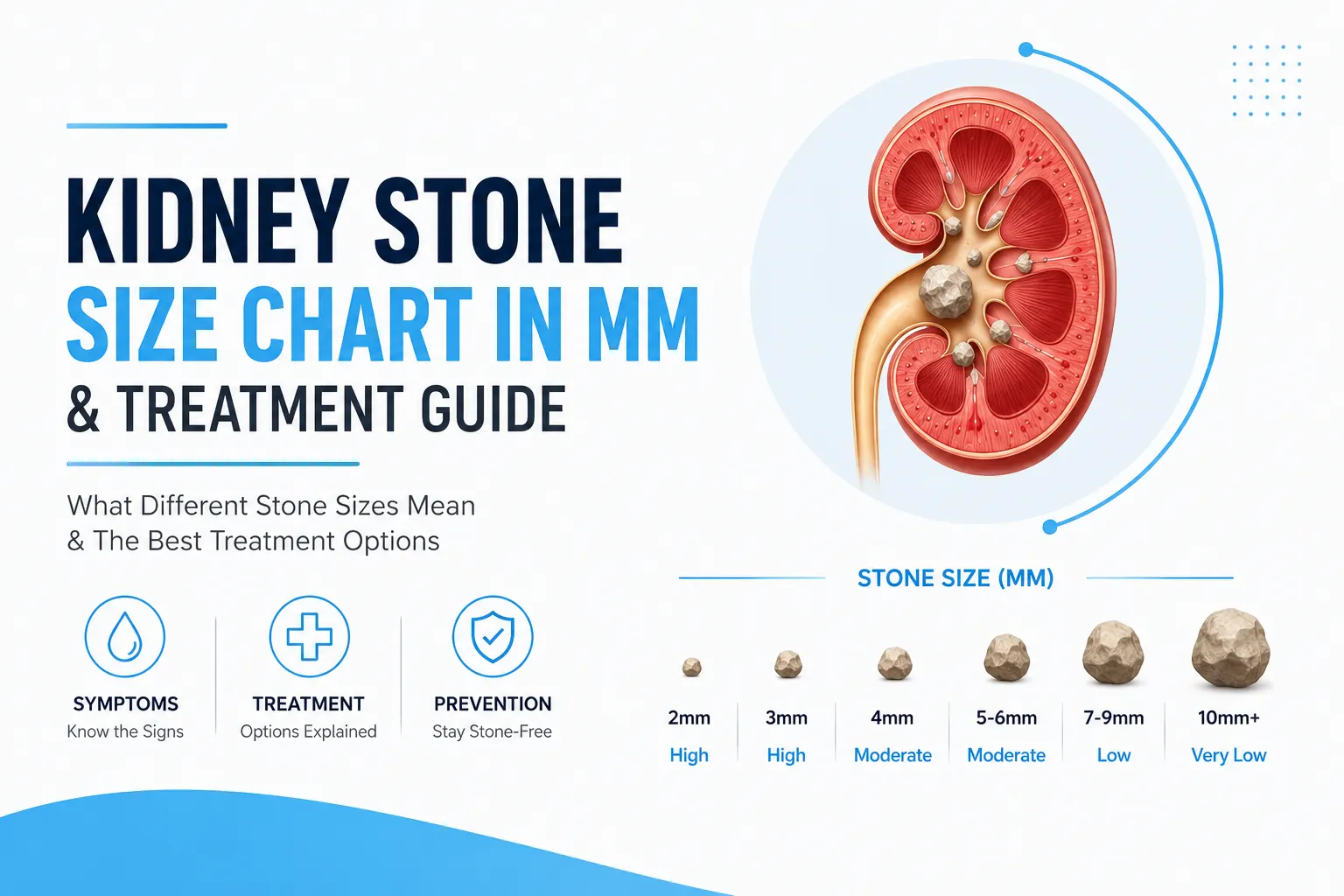
Urinary stones are among the most common problems that affect the urinary tract in adults. Although a lot of focus is placed on the ache due to the development of kidney stones, their size is vital in determining the most effective option. In the case of a tiny stone that can be passed easily by consuming more fluids, while a massive stone could end up blocking a urological tract.
Understanding the method of measuring kidney stones and the significance of different sizes will allow patients to understand their condition better. This guide will explain the size chart for kidney stones in millimeters and the treatments that are typically recommended for different types of stones of different sizes.
Why Does Kidney Stone Size Matter?
The size of a kidney stone is one of the primary factors that help determine if it will be passed out of the body by itself or will need any intervention. Smaller kidney stones normally pass out of the body along with urine without complications. Large stones can obstruct the ureter and cause various issues.
The sizes of kidney stones are generally measured in millimeters (mm).
Kidney Stone Size Chart in MM and Treatment
|
Stone Size |
Approximate Comparison |
Chance of Passing Naturally |
Treatment Approach |
|
1-2 mm |
Grain of sand |
Very High |
Increased fluids, medications |
|
2 mm |
Small crystal |
High |
Conservative management |
|
3 mm |
Peppercorn-sized |
High |
Observation and hydration |
|
4 mm |
Lentil-sized |
Moderate to High |
May need medications |
|
5-6 mm |
Pea-sized |
Moderate |
Possible medical intervention |
|
7-9 mm |
Large pea |
Low |
Usually requires treatment |
|
10 mm or larger |
Marble-sized |
Very Low |
Surgical treatment often needed |
2mm Kidney Stone Actual Size
A kidney stone of 2mm in size is incredibly small, about the same size as one very tiny piece of salt.
The majority of 2mm stones pass through within a couple of days or weeks.
- A proper intake of water
- Drugs to relieve pain
- The use of medicines that ease the urinary tract
- Regularly monitored
Despite being tiny, they could cause discomfort while moving through the urinary tract.
3 MM (3mm) Kidney Stone Actual Size
A 3mm 3mm kidney stone's dimensions are similar to the size of a sesame seed.
A majority of people with 3mm stones can get through it with no surgery. But the symptoms could include:
- A sharp pain in the lower back or on the side
- Burning during urination
- Frequent urinary urges
- Urine with blood
Doctors generally advise conservative treatment unless any complications occur.
Suffering from Kidney or Urinary Problems? Get Expert Care Today
Don’t ignore symptoms like pain, difficulty in urination, or recurring infections. Early treatment ensures faster recovery and better outcomes.
3.5mm Kidney Stone Picture: How Big Is It?
Many patients seek the 3.5mm kidney stone photo to get a better idea of its size. A 3.5mm stone can be slightly bigger than a sesame seed and smaller than an apple.
Though small, a rock of this size could be lodged in a small section of the ureter and cause significant discomfort. Most 3.5mm stones will pass by themselves; however, medical attention is usually advised.
4 MM Stone Size in the Kidney
A size of 4 millimeters within the kidney is an essential threshold.
Although many 4mm stones can pass by themselves, the rate of success begins to decline in comparison to stones smaller in size. Factors affecting passage include:
- Stone's position
- The stone's shape
- The anatomy of the patient
- The presence of swelling or obstruction
The treatment may consist of:
- More fluid intake
- Alpha-blocker medication
- Management of pain
- Imaging follow-up
If the stone is unable to move or causes extreme discomfort, further therapy might be necessary.
Timely Treatment Can Prevent Serious Complications
Advanced minimally invasive procedures help you recover faster with less pain and better results. Consult an experienced urologist today.
Symptoms of Kidney Stones
The signs are usually based on the dimensions and position of the stones that are located.
Common indications include:
- Pain in the back, side, or lower abdomen
- In waves, the pain is felt
- The urine of a person is stained with blood.
- Burning sensation during urination
- Nausea and vomiting
- Frequent urination
- Chills and fever if there is an infection
Small stones can't cause any symptoms until they begin to transit into the urinary tract.
When Is Treatment Necessary?
Most kidney stones do not require surgery. The treatment is usually recommended if:
- The stone is greater than 5-6 millimeters
- The pain becomes difficult to manage.
- The flow of urine has been restricted
- Kidney function can be affected
- Infection develops
- The stone cannot be removed after a couple of weeks.
Early evaluation helps prevent complications and protects kidney health.
Treatment Options for Kidney Stones
Medical Management
Small stones are typically treated using:
- More water consumption
- Medicines for pain relief
- Alpha-blockers are used to aid stone flow
- Dietary changes
Extracorporeal Shock Wave Lithotripsy (ESWL)
This non-invasive procedure makes use of energy waves that break up stones into smaller pieces that are able to move naturally.
Ureteroscopy (URS)
A tiny scope is placed into the urinary tract in order to find and then remove or break the stone by using laser technology.
Percutaneous Nephrolithotomy (PCNL)
This minimally invasive procedure is generally recommended for large kidney stones, usually greater than 2 centimeters.
16,000+ Successful Surgeries. Trusted Urology Care
Get accurate diagnosis and advanced treatment for kidney stones, prostate issues, and urological conditions.
Tips to Prevent Kidney Stones
Although not all stones can be avoided, these ways to reduce the risk are:
- Take 2.5 to 3 liters of water per day
- Reduce your intake of salt.
- Limit the consumption of sugary beverages
- Maintain an appropriate weight
- Consume adequate dietary calcium
- Use the dietary guidelines that are based on the stone type
- Seek medical evaluation for recurrent stones
Why Consult Dr. Aditya K. Sharma?
Dr. Aditya K. Sharma, a Urologist in Lucknow, has over 20 years of experience in diagnosing and treating kidney stones and other complex urological conditions. He specializes in minimally invasive stone treatments, including Extracorporeal Shock Wave Lithotripsy (ESWL), Ureteroscopy (URS), Percutaneous Nephrolithotomy (PCNL), and laser stone surgery, ensuring safe and effective care with faster recovery. Using advanced diagnostic techniques, he accurately evaluates the size, location, and type of kidney stone to recommend the most appropriate treatment. Every patient receives a personalized treatment plan, along with expert guidance on hydration, diet, and lifestyle changes to help prevent future stone formation. With a strong focus on patient-centered care, Dr. Aditya Sharma provides compassionate support, clear communication, and comprehensive follow-up to help patients achieve long-term kidney health and reduce the risk of recurrent kidney stones.
Kidney Stone Treatment in Lucknow
Suffering from Kidney or Urinary Problems? Get Expert Care Today
Don’t ignore symptoms like pain, difficulty in urination, or recurring infections. Early treatment ensures faster recovery and better outcomes.
If you're experiencing severe back or side pain, blood in the urine, burning during urination, frequent urination, or recurrent kidney stones, it may indicate a kidney stone that requires medical evaluation. While small kidney stones (2–4 mm) often pass naturally with adequate hydration and medication, larger stones can block the urinary tract, cause infection, damage kidney function, and may require advanced treatment. Early diagnosis helps prevent complications and ensures timely care.
Dr. Aditya K. Sharma, Urologist in Lucknow, accurately diagnoses kidney stones using advanced imaging and recommends personalized treatment based on the stone's size, location, and severity. He offers comprehensive kidney stone care, including medical management, Extracorporeal Shock Wave Lithotripsy (ESWL), Ureteroscopy (URS), Percutaneous Nephrolithotomy (PCNL), and laser stone treatment, while also providing dietary and lifestyle guidance to help prevent future kidney stone recurrence.
Timely Treatment Can Prevent Serious Complications
Advanced minimally invasive procedures help you recover faster with less pain and better results. Consult an experienced urologist today.
Related treatments
-
RIRS Surgery (Retrograde Intrarenal Surgery)
-
16,000+ Successful Surgeries. Trusted Urology Care
Get accurate diagnosis and advanced treatment for kidney stones, prostate issues, and urological conditions.
Laser URSL Surgery (Laser Ureteroscopy)
- Mini PCNL Surgery
Key Takeaways
- Kidney stone size is the most important factor in deciding whether a stone can pass naturally or needs medical treatment.
- Stones smaller than 4 mm usually pass on their own with adequate hydration, pain management, and medical follow-up.
- Kidney stones measuring 5–6 mm may require medication or minimally invasive procedures if they do not pass naturally.
- Stones larger than 7 mm have a lower chance of passing without treatment and often require procedures like ESWL or ureteroscopy.
- Symptoms such as severe back pain, blood in the urine, burning during urination, fever, or difficulty passing urine should never be ignored.
- Treatment options include medical management, ESWL, ureteroscopy (URS), and PCNL, depending on the stone's size, location, and severity.
- Preventing kidney stones is possible by staying well-hydrated, reducing salt intake, maintaining a healthy weight, and following dietary recommendations.
- Early diagnosis and timely consultation with a urologist can help prevent complications and protect long-term kidney health.
FAQs
1. Can a 2 mm kidney stone pass naturally?
Yes, most 2 mm kidney stones pass naturally with adequate hydration, medication, and regular follow-up.
2. Is a 4 mm kidney stone considered large?
No, a 4 mm stone is still small, but it has a lower chance of passing naturally than stones under 3 mm.
3. What size kidney stone usually requires surgery?
Kidney stones larger than 10 mm or those causing blockage, infection, or severe pain often require surgical treatment.
4. How long does it take to pass a small kidney stone?
Most small kidney stones pass within a few days to several weeks, depending on their size and location.
5. Which treatment is best for kidney stones?
The best treatment depends on the stone's size, location, symptoms, and overall kidney health.
6. Can drinking more water help remove kidney stones?
Yes, drinking enough water helps flush out small kidney stones and reduces the risk of new stone formation.
Related Blog: Kidney Stone Symptoms, Causes, and Home Remedies
Suffering from Kidney or Urinary Problems? Get Expert Care Today
Don’t ignore symptoms like pain, difficulty in urination, or recurring infections. Early treatment ensures faster recovery and better outcomes.
Conclusion
Understanding the kidney stone size chart in mm and how it can be treated helps a person understand whether his or her kidney stone will pass through without the need for medical intervention or otherwise. Kidney stones in small sizes, like a 2 mm kidney stone, a 3 mm kidney stone, or a 4 mm kidney stone, can pass through naturally with the help of adequate fluids, proper medication, and periodic follow-ups. However, large kidney stones can cause discomfort to the patient by blocking the urine flow or even leading to infections.
Based on the Dr. Aditya K. Sharma, Senior Urologist with more than 20 years of expertise in advanced urology as well as minimally invasive surgeries, it is imperative to consider kidney stones seriously if symptoms start to become more severe. Getting a timely and accurate diagnosis will help prevent the occurrence of complications due to kidney stones. If you experience painful sensations, have red spots when going to the bathroom, are experiencing issues with the flow of urine, or are experiencing recurrent stones, a visit to a doctor can be helpful.